When someone smokes cannabis outdoors, the smoke spreads as a cloud of fine particles and gases. Unlike cigarette smoke, which most people now know to avoid, cannabis smoke is still widely treated as harmless. It is not.
Cannabis smoke contains fine particulate matter (PM2.5) — particles small enough to bypass nasal filtration and reach deep lung tissue. It also carries volatile sulfur compounds, carbon monoxide, ammonia, and hydrogen cyanide.
Olfactory adaptation — the nose's natural tendency to stop registering persistent smells — kicks in within a few minutes. The smoker quickly stops noticing. The people around them do not have that luxury.
Clean air
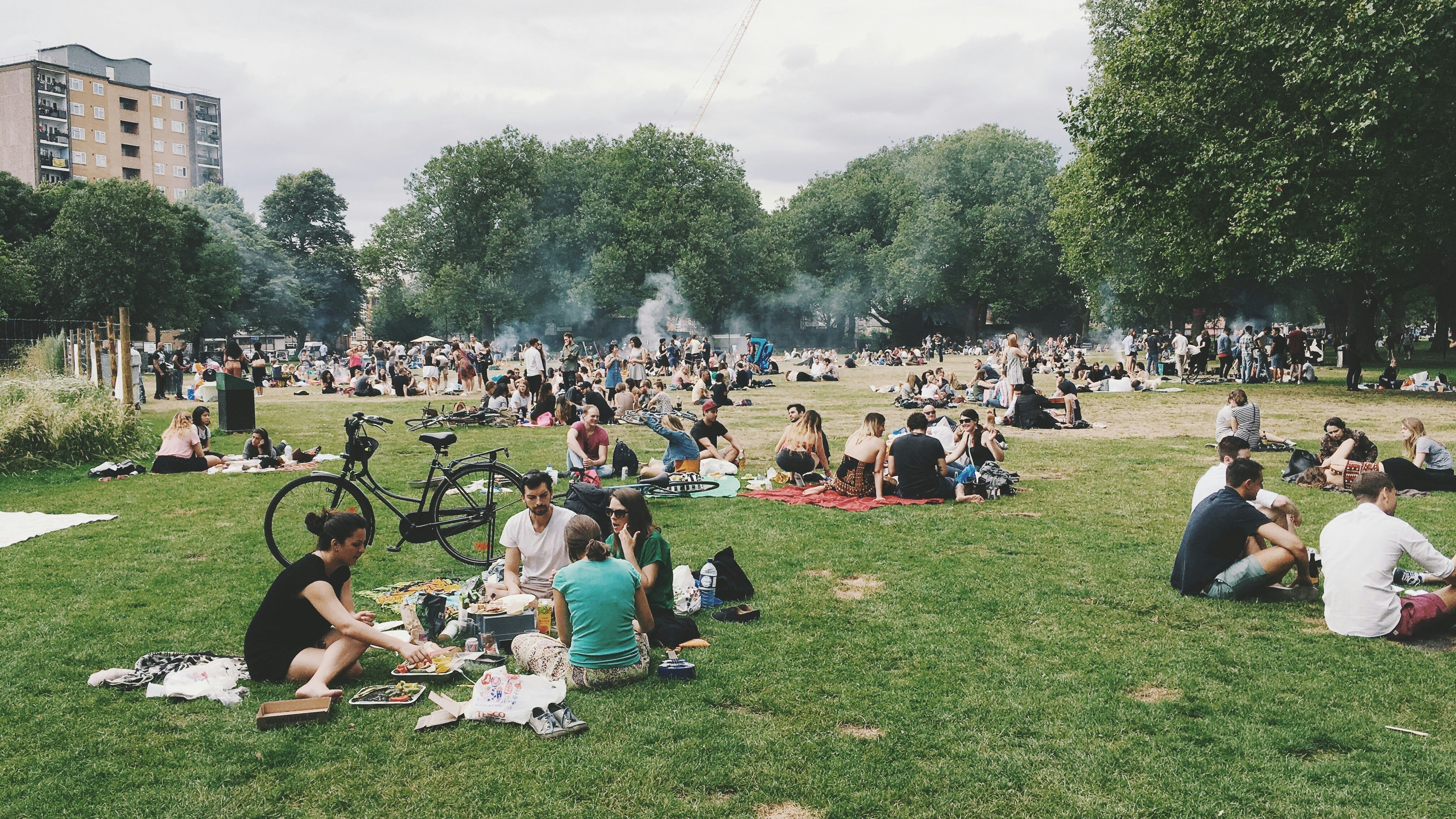
This park belongs to everyone
Public parks, beaches, and sidewalks are shared spaces. Clean air is not a privilege — it is something every person there is entitled to.
Why smokers often don't realize the problemThe nose stops detecting a persistent smell after roughly 60 seconds — a process called olfactory adaptation. Smokers become effectively "nose-blind" to their own smoke. Sensors measuring PM2.5 (fine particles) don't have that limitation: a single joint can push nearby readings to 350 µg/m³ — well into hazardous range.
Air quality sensors
Fine particles (PM2.5)12 µg/m³
Safe (0–15)Hazardous (250+)
Sulfur compounds (odor)None
This is what clean shared air looks like. Everyone in the space can breathe without risk.
How far does it travel?
Field measurements have detected cannabis smoke PM2.5 at distances of at least 3 meters (about 10 feet) outdoors, with levels depending on wind and proximity. No study has measured cannabis-specific dispersion at greater distances, though tobacco smoke research shows particles traveling considerably farther in calm conditions.
How far does smoke travel?
Drag to change your distance from a smoker and see how fine particle levels change.
Your distance from the smoker:15 feet
5ft50ft
Cannabis jointHazardous
157µg/m³ PM2.5
At 15ft, you are breathing cannabis smoke particles at 157 µg/m³.
Tobacco cigaretteModerate
38µg/m³ PM2.5
Tobacco at 15ft reads 38 µg/m³. Still above safe levels at close range.
Illustrative model based on measured concentration ranges from field monitoring studies. Exact values vary with wind speed, humidity, and smoking technique.
What the monitoring shows:
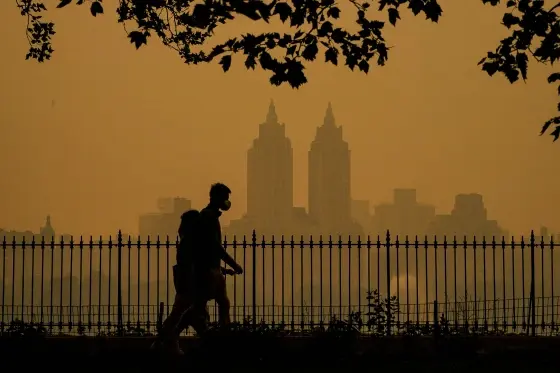
At close range, PM2.5 can hit levels classified as hazardous — comparable to wildfire smoke.
At moderate distances, levels remain high enough to trigger symptoms in people with asthma.
Concentrations drop with distance but stay above EPA safe limits well beyond arm's length.
Common arguments — and what the evidence shows
Cannabis smoke produces PM2.5 at levels comparable to or exceeding tobacco, and public consumption remains illegal in most US states. These facts address the most common justifications.
Common arguments — and what the evidence shows
What people say
“It's legal now — I can smoke wherever I want.”
What the evidence shows
Legalization covers adult possession, not public consumption. The vast majority of US states explicitly prohibit smoking cannabis in parks, beaches, and sidewalks, including nearly all states that have legalized recreational use.
What people say
“It's just a smell outside. It can't actually hurt you.”
What the evidence shows
Outdoor cannabis smoke releases PM2.5 particles that penetrate deep into lung tissue. People with asthma, COPD, or respiratory sensitivities may experience symptom exacerbation from secondhand cannabis smoke, which produces PM2.5 at levels comparable to or exceeding tobacco.
What people say
“If you don't like it, just move.”
What the evidence shows
Public spaces belong to everyone equally. Asking families, children, and elderly people to leave a park so one person can smoke shifts the burden onto the people who did nothing wrong.
What people say
“Car exhaust is way worse anyway.”
What the evidence shows
Vehicle emissions are a separate public health problem — one that society is actively working to reduce. The existence of one pollutant does not make adding another one acceptable.
What it does to blood vessels
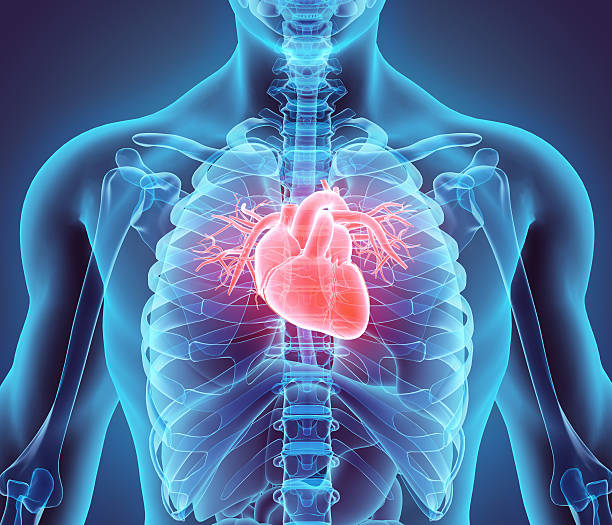
In a preclinical study, one minute of secondhand cannabis smoke exposure caused measurable impairment of blood vessel function — and that impairment lasted over 90 minutes. The same researchers found tobacco smoke caused similar impairment that recovered in about 30 minutes.
This was an animal study. Human responses may differ. But it raises a real question about what repeated exposure does to cardiovascular health, especially for people who live or work near regular smokers.
Real case
D.C. court rules cannabis smoke is a private nuisance
In Washington, D.C., retiree Josefa Ippolito-Shepherd sued her downstairs neighbor after cannabis smoke drifted through cracks in her duplex. Judge Ebony Scott ruled in her favor, writing: "The public interest is best served by eliminating the smoking nuisance and the toxins that it deposits into the air, toxins that involuntary smokers have no choice but to inhale." It is believed to be the first ruling of its kind.
Cannabis being legal for personal use does not mean it can be smoked anywhere. The vast majority of US states explicitly prohibit public cannabis consumption — parks, beaches, sidewalks, and transit are off-limits in most places regardless of whether the state has legalized recreational use.
Enforcement is inconsistent. But the legal picture is clear: personal use rights apply in private.