Smoking anything means inhaling the products of burning plant material. Cannabis is no exception.
When cannabis burns, it produces tar, ammonia, hydrogen cyanide, benzene, and other compounds that damage lung tissue directly. Cannabis smoke contains ammonia at up to 20 times the concentration found in tobacco smoke, and hydrogen cyanide at 3–5 times tobacco levels.
Inside the lung: healthy vs. smoke-exposed
These tiny air sacs are where oxygen enters your blood.
Normal lung function
In a healthy lung, these air sacs are thin, elastic, and clear. Tiny hair-like structures called cilia sweep out dust and particles automatically. Oxygen moves efficiently into the bloodstream.
Tar depositsNone
Cilia functionNormal
Your lungs are lined with tiny hair-like structures called cilia whose job is to sweep out particles and keep airways clear. Hydrogen cyanide in cannabis smoke paralyzes them within seconds. Over time, smokers develop a chronic cough — not as a quirk, but because coughing becomes the only way to clear what the cilia can no longer remove.
What chronic cannabis smoking does:
Persistent cough and increased mucus production.
More tar deposited per puff than tobacco, because of deeper inhalation and longer breath-holding.
Higher risk of respiratory infections.
Early signs of COPD in long-term users.
Real case
Severe emphysema in a cannabis-only smoker
A case published in Cureus (2025) documents a man who developed very severe COPD and emphysema with no tobacco history, no secondhand tobacco exposure, and no genetic predisposition. He had been a competitive multi-sport athlete before years of marijuana smoking led to progressive respiratory decline.
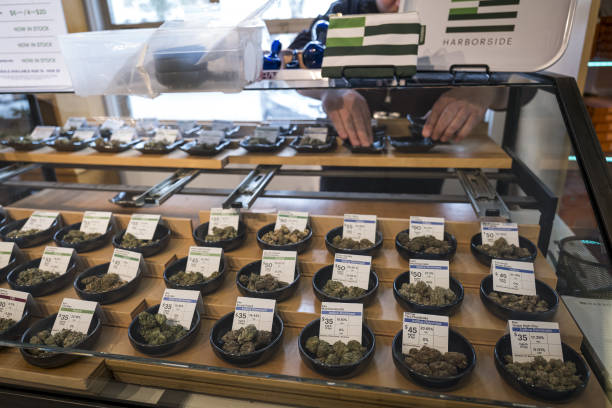
The THC content of cannabis has changed dramatically. Average concentration rose from about 4% in 1995 to over 12% by 2014. Dispensary flower today routinely tests at 20–30%. Concentrates — wax, shatter, oil — can reach 80–90%.
This matters because the effects scale with dose. The studies from the 1990s were examining a weaker product than what most people are using now. Conclusions from that era don't translate directly to today's market.
How potency has changed since 1995
Drag the slider to see how average THC levels have shifted over three decades.
1995200520152026
Average THC25–85%+
A different product entirely
2026
Today's dispensary flower routinely tests at 25–30% THC. Concentrates — wax, shatter, oil — can reach 80–90%. This is not the same drug that research from 20 years ago describes.
Effect on the brain:Overwhelming receptor activity; associated with elevated psychosis risk in regular users.
How THC works in the brain
Your brain already has its own cannabis-like system. Understanding it is the key to understanding what THC does.
Your body's own version
Your brain produces molecules called endocannabinoids — mainly anandamide and 2-AG. They regulate mood, memory, appetite, pain, and stress by binding to CB1 receptors throughout the brain.
The important thing about this system is how precisely it works. Endocannabinoids are made on demand, in specific spots, and broken down quickly. It is local, short-lived, fine-tuned signaling.
THC disrupts this. It activates CB1 receptors across the entire brain at once and stays active for hours instead of seconds. The issue is not that THC is stronger than your natural molecules — it is that it floods a system designed for precision.
What happens with regular use
When CB1 receptors get hammered repeatedly, the brain reduces their number — a process called downregulation. PET brain scans have confirmed this directly: chronic cannabis users have measurably fewer CB1 receptors.
The good news: this is largely reversible. After about four weeks without cannabis, receptor levels return to near-normal. That is why the first month of quitting is hardest, and why it genuinely gets better.
How THC affects the brain's signaling system
The brain has its own cannabis-like system. THC hijacks it.
Your brain's own system
Your brain naturally produces its own cannabis-like molecules that help regulate mood, memory, and stress. They work in small amounts and the brain controls exactly how much is released.
This system helps maintain balance. It is not designed to handle the signal strength of high-potency THC.
Other effects tied to chronic high-potency use:
Motivation and mood. Some brain imaging research has found reduced dopamine production in the reward center of regular users, which may explain the flatness and low drive that heavy users sometimes describe. Not all studies agree, but the pattern is consistent enough to take seriously.
Psychosis risk. Daily high-potency use is linked to significantly higher rates of psychotic disorders, especially in people with family history or other vulnerability.
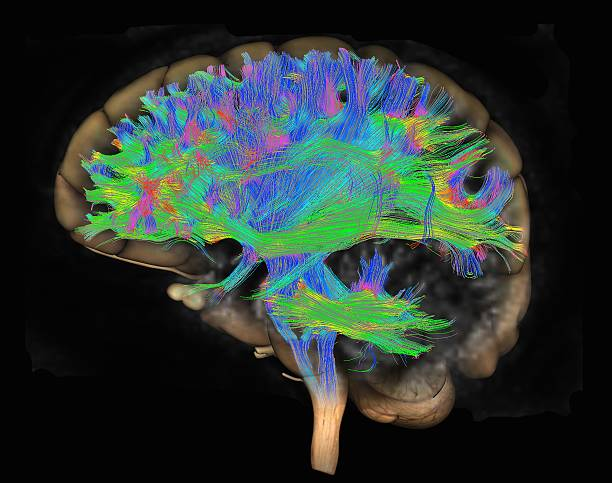
Brain wiring changes. Some imaging studies have found altered white matter in the connections between brain regions in regular users. This is still an active area of research.
Real case
16-year-old hospitalized for cannabis-induced psychosis
A 2025 case report documents a 16-year-old hospitalized after regular use of high-potency vape products. Today's products average over 20% THC compared to about 1.5% in the 1970s. Population studies across Ontario and Europe have since confirmed a clear link between adolescent cannabis use and psychotic disorder diagnosis.
The brain is not fully built until around age 25. During adolescence, the endocannabinoid system is not just sending signals — it is helping decide how the brain gets wired.
CB1 receptors in the prefrontal cortex peak during early adolescence. The system is actively shaping which neural connections get kept and which get pruned. THC during this window does not just activate the system — it disrupts the construction process.
A study tracking 799 teenagers found that cannabis use was linked to accelerated thinning of the prefrontal cortex on MRI scans. The pattern of thinning matched CB1 receptor maps exactly — strong evidence that the effect is directly neurobiological.
More from the research:
Risk of cannabis use disorder roughly doubles if you start as a teenager versus as an adult.
Persistent adolescent use is linked to cognitive decline that lasts into your late 30s.
Daily high-potency use before 18 is tied to substantially higher psychosis risk.
Adolescent brains show a weaker protective response to THC overstimulation than adult brains, which may explain why early use tends to cause more lasting effects.
Cannabis use disorder
About 9–10% of everyone who tries cannabis develops cannabis use disorder — continued use despite real negative consequences. Among daily users, it is 30–40%. For people who start as teenagers, the lifetime risk roughly doubles.
This is not a character flaw. It has a neurobiological basis, and it responds to treatment. If you are concerned about your own use, the [quitting page](/quitting) has practical information.